
NORTHERN CIRCUIT
NORTHERN CIRCUIT
CIRCUIT HIGHLIGHT
The northern tourism circuit is by far the most popular safari circuit in Tanzania, comprising most of the must-see destinations in the country. If you’re a first-time visitor to Tanzania, this is where you want to be.
The circuit starts in Arusha and includes, from east to west: Arusha National Park at the foot of Mount Meru, Tarangire National Park 110km southwest of the town of Arusha, Manyara Ranch between Tarangire National Park and Lake Manyara National Park, Lake Manyara National Park at the bottom of the Gregory Rift, the Ngorongoro Conservation Area (which includes the Ngorongoro caldera, the Empakaai Crater and the southern Serengeti plains of Lake Ndutu), and the Serengeti National Park that stretches north to the Tanzania/Kenya border.
DESTINATIONS INFORMATIONS
Arusha National Park
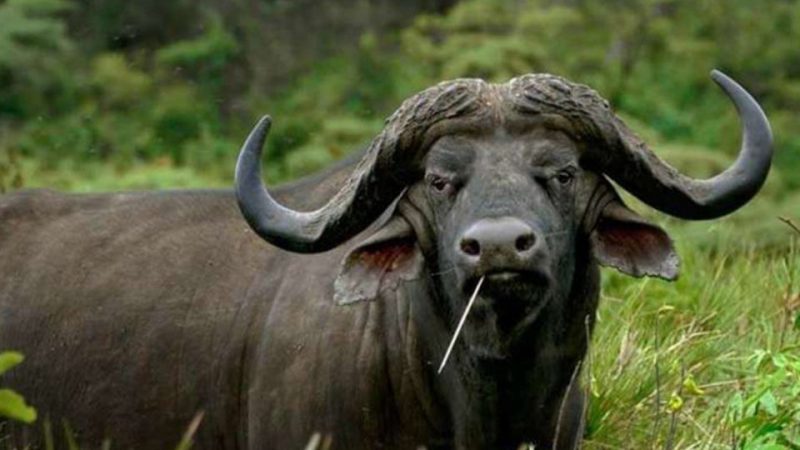
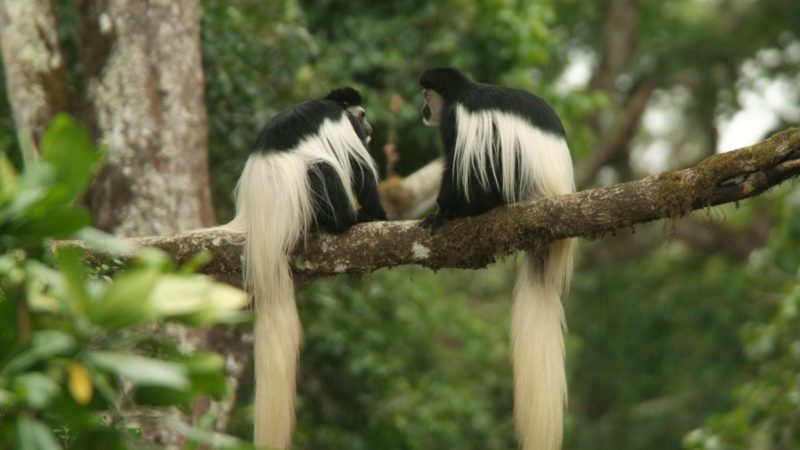
Arusha National Park covers Mount Meru, a prominent volcano with an elevation of 4566 m, in the Arusha Region of north eastern Tanzania. The park is small but varied with spectacular landscapes in three distinct areas. In the west, the Meru Crater funnels the Jekukumia River; the peak of Mount Meru lies on its rim. Ngurdoto Crater in the south-east is grassland. The shallow alkaline Momella Lakes in the north-east have varying algae colors and are known for their wading birds.
Mount Meru is the second highest peak in Tanzania after Mount Kilimanjaro, which is just 60 km away and forms a backdrop to views from the park to the east. Arusha National Park lies on a 300-kilometre axis of Africa’s most famous national parks, running from Serengeti and Ngorongoro Crater in the west to Kilimanjaro National Park in the east.
Arusha National Park has a rich variety of wildlife, but visitors shouldn’t expect the same game-viewing experience they find in other national parks of Tanzania’s northern circuit. Despite the small size of the park, common animals include giraffe, Cape buffalo, zebra, warthog, the black-and-white colobus monkey, the blue monkey, flamingo, elephant, bushbuck and many other African animals. Leopard populations are present, but rarely seen.
Birdlife in the forest is prolific, with many forest species more easily seen here than elsewhere on the tourist route – Narina trogon and bar-tailed trogon are both possible highlights for visiting birders, whilst the range of starling species provide somewhat less gaudy interest.
The park is just a few kilometers north east of Arusha, though the main gate is 25 km east of the city. It is also 58 km from Moshi and 35 km from Kilimanjaro International Airport (JRO).
Tarangire National Park
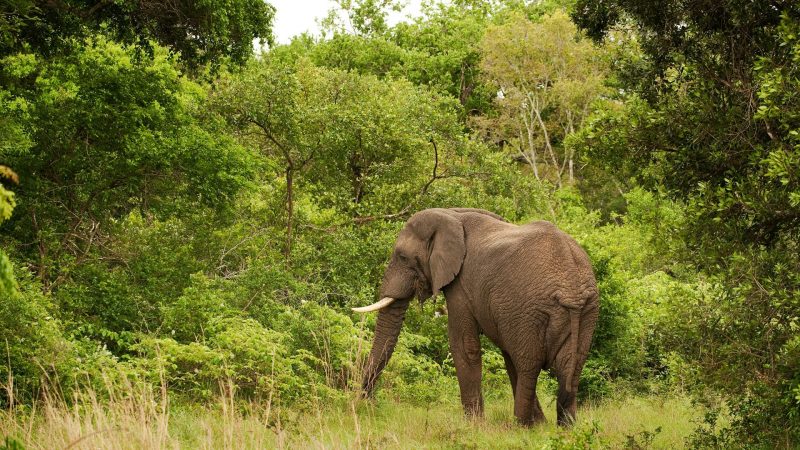
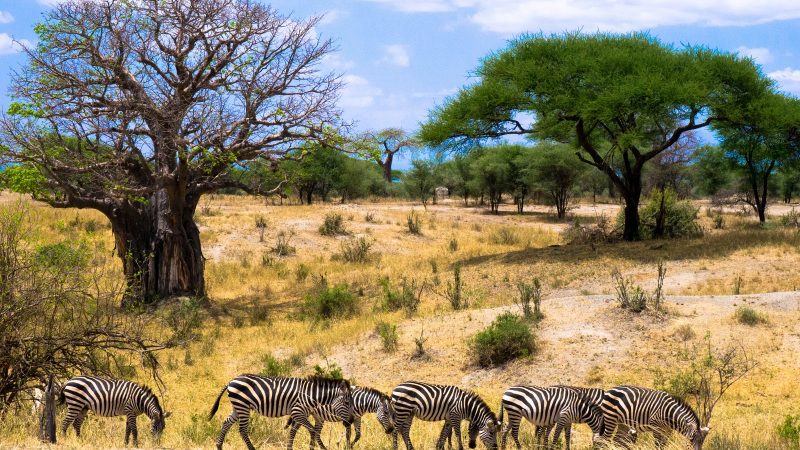
Tarangire National Park is a national park in Tanzania’s Manyara Region. Tarangire National Park can be reached via paved road south from Arusha in less than two hours. The name of the park originates from the Tarangire River that crosses the park. The Tarangire River is the primary source of fresh water for wild animals in the Tarangire Ecosystem during the annual dry season. The Tarangire Ecosystem is defined by the long-distance migration of wildebeest and zebras.
It covers an area of approximately 2,850 square kilometers (1,100 square miles.) The landscape is composed of granitic ridges, river valley, and swamps. Vegetation is a mix of Acacia woodland, Combretum woodland, seasonally flooded grassland and baobab trees. The park is famous for its high density of elephants, zebra, wildebeest and Cape buffalo. Other common resident animals include waterbuck, giraffe, dikdik, impala, eland, Grant’s gazelle, velvet monkey, banded mongoose, and olive baboon.
Predators in Tarangire include lion, leopard, cheetah, caracal, honey badger, and African wild dog. Home to more than 550 bird species, the park is a haven for bird enthusiasts. The park is also famous for the termite mounds that dot the landscape. Those that have been abandoned are often home to dwarf mongoose. In 2015, a giraffe that is white due to laicism was spotted in the park.
Lake Manyara National Park
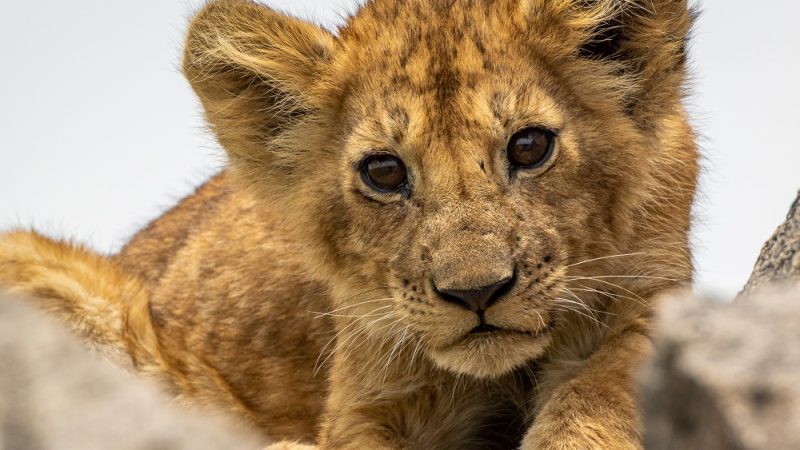
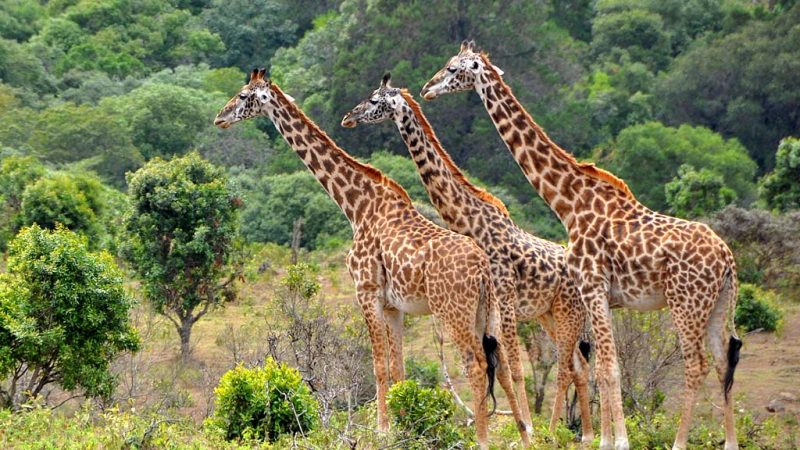
Lake Manyara National Park Is in Tanzania’s Arusha and Manyara Regions, situated between Lake Manyara and the Great Rift Valley. Lake Manyara National Park is located 126 km (78 mi) south west of Arusha and can be reached by car in an hour and a half It is administered by the Tanzania National Parks Authority, and covers an area of 325 km2 (125 sq mi) including about 230 km2 (89 sq mi) lake surface. More than 350 bird species have been observed on the lake.
Since the 1920s, Lake Manyara area was used for sports hunting. In 1957, a game reserve was established. In 1960, it was given National Park status and in 1974 about 1,400 acres were added to the southern end. The majority of the land area of the park is a narrow strip running between the Gregory Rift wall to the west and Lake Manyara, an alkaline lake, to the east. The national park only includes the northwest quadrant of the lake, about 200 km2 (77 sq mi). It is part of the much larger Lake Manyara Biosphere Reserve, established in 1981 by UNESCO as part of its Man and the Biosphere Programe.
Lake Manyara is a shallow alkaline lake at an altitude of 960 m (3,150 ft), formed in a depression in the Rift Valley System. When full, the lake is a maximum of 10 ft (3.0 m) deep and covers two-thirds of the park. The lake has no outflow, but is fed by underground springs and by several permanent streams that drain surrounding Ngorongoro Highlands. The lake’s depth and the area it covers fluctuate significantly. In extreme dry periods the surface area of the lake shrinks as the waters evaporate and at times the lake has dried up completely.
Populations of large migratory mammals that are concentrated primarily in Tarangire National Park, but also move through Lake Manyara National Park include wildebeest, zebra, Thomson’s gazelle and Grant’s gazelle. Large herds of wildebeest and other plains game from the Mto wa Mbu Game Controlled Area enter the park from the north for short periods.
Wildebeest exclusively graze the alkaline grasslands around the lake, and numbers are highest during the dry season, dropping to small resident populations in the wet season. Herbivores of Lake Manyara National Park include zebra, bushbuck, waterbuck, Grant’s gazelle, impala, Thomson’s gazelle, Cape buffalo, giraffe, hippopotamus, baboon, warthog, and elephant.
Predators of Lake Manyara National Park include lion, leopard, African wild cat, spotted hyena, black-backed jackal, bat-eared fox, serval, honey badger, African civet, genet species and several mongoose species. Cheetah and African golden cat are sighted occasionally.
Ngorongoro Conservation Area
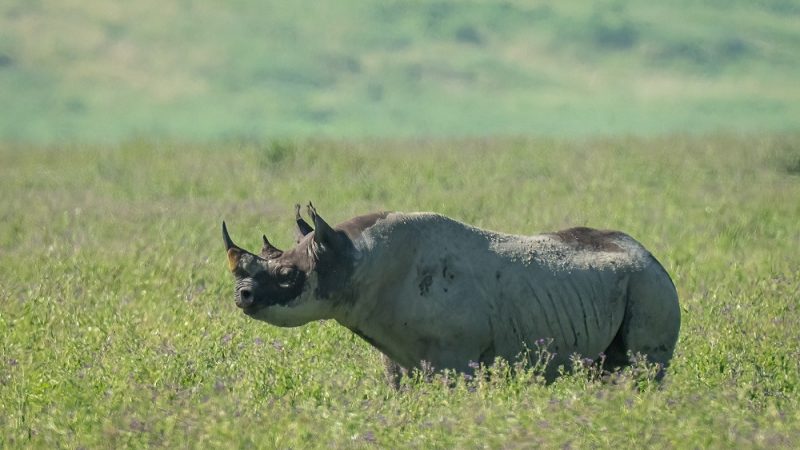
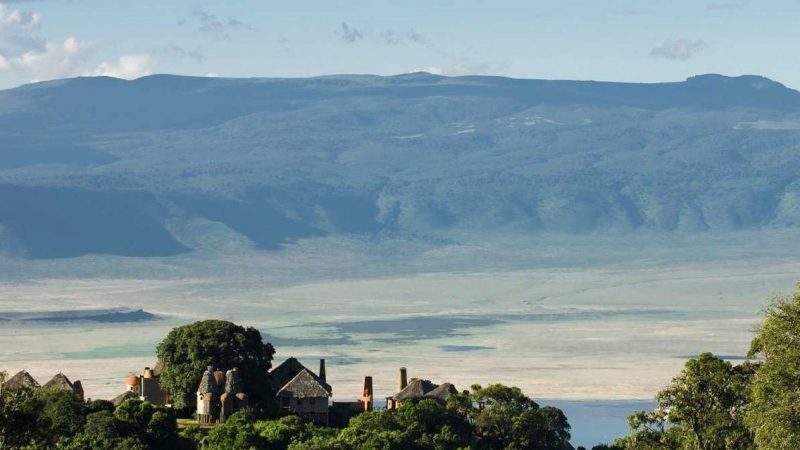
Ngorongoro Conservation Area is a protected area and a World Heritage Site located 180 km (110 mi) west of Arusha in the Crater Highlands area of Tanzania. The area is named after Ngorongoro Crater, a large volcanic caldera within the area. The conservation area is administered by the Ngorongoro Conservation Area Authority, an arm of the Tanzanian government, and its boundaries follow the boundary of the Ngorongoro Division of the Arusha Region.The name of the crater has an onomatopoeic origin; it was named by the Maasai pastoralists after the sound produced by the cowbell (ngoro ngoro).
Based on fossil evidence found at the Olduvai Gorge, various hominid species have occupied the area for over 3 million years. Hunter-gatherers were replaced by pastoralists a few thousand years ago. The Mbulu came to the area about 2,000 years ago and were joined by the Datooga around the year 1700. Both groups were driven from the area by the Maasai in the 1800s.
The main feature of the Ngorongoro Conservation Authority is the Ngorongoro Crater, the world’s largest inactive, intact and unfilled volcanic caldera. The crater, which formed when a large volcano exploded and collapsed onward two to three million years ago, is 610 metres (2,000 feet) deep and its floor covers 300 square kilometres (100 square miles). Estimates of the height of the original volcano range from 4,500 to 5,800 metres (14,800 to 19,000 feet) high. The crater floor is 1,800 metres (5,900 feet) above sea level. The crater was voted by Seven Natural Wonders as one of the Seven Natural Wonders of Africa in Arusha, Tanzania.
The volcanic eruptions like that of Ngorongoro, which resulted in the formation of Ngorongoro Crater in Tanzania, were very common. Similar collapses occurred in the case of Olmoti and Empakaai, but they were much smaller in magnitude and impact. Out of the two recent volcanoes to the northeast of the Empakaai caldera, Kerimasi and Ol Doinyo Lengai is still active and had major eruptions in 2007 and 2008. Smaller ash eruptions and lava flows continue to slowly fill the current crater. Its name is Maasai for ‘Mountain of God’.
The Ngorongoro Conservation Area also protects Oldupai or Olduvai Gorges, situated in the plains area. It is considered to be the seat of humanity after the discovery of the earliest known specimens of the human genus, Homo habilis as well as early hominidae, such as Paranthropus boisei.
The Olduvai Gorge is a steep-sided ravine in the Great Rift Valley, which stretches along eastern Africa. Olduvai is in the eastern Serengeti Plains in northern Tanzania and is about 50 kilometres (31 mi) long. It lies in the rain shadow of the Ngorongoro highlands and is the driest part of the region. The gorge is named after ‘Oldupai’, the Maasai word for the wild sisal plant, Sansevieria ehrenbergii.
It is one of the most important prehistoric sites in the world and research there has been instrumental in furthering understanding of early human evolution. Excavation work there was pioneered by Mary and Louis Leakey in the 1950s and is continued today. Some believe that millions of years ago, the site was that of a large lake, the shores of which were covered with successive deposits of volcanic ash. Large animals, mostly ungulates, live in the crater.
Large mammals in the crater include the black rhinoceros the African buffalo or Cape buffalo and the hippopotamus There also are many other ungulates: the blue wildebeest Grant’s zebra the common eland and Grant’s and Thomson’s gazelles Waterbucks occur mainly near Lerai Forest. Absent are Giraffe, impala topi oribi , crocodile. Cheetah, East African wild dog and African leopard are rarely seen.
Serengeti National Park
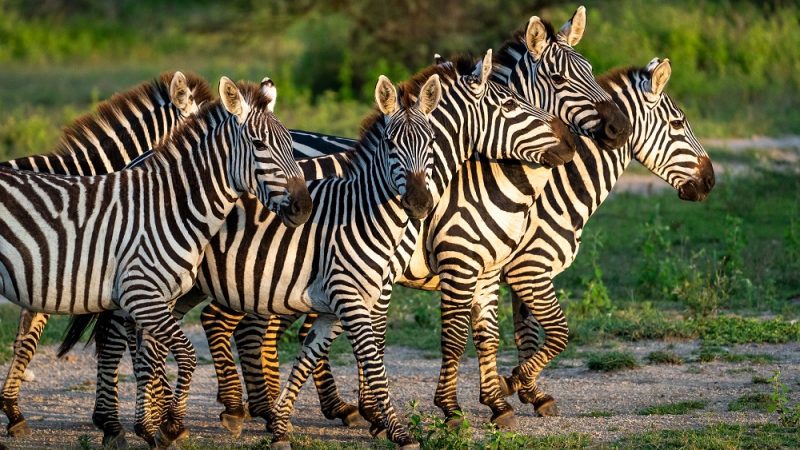
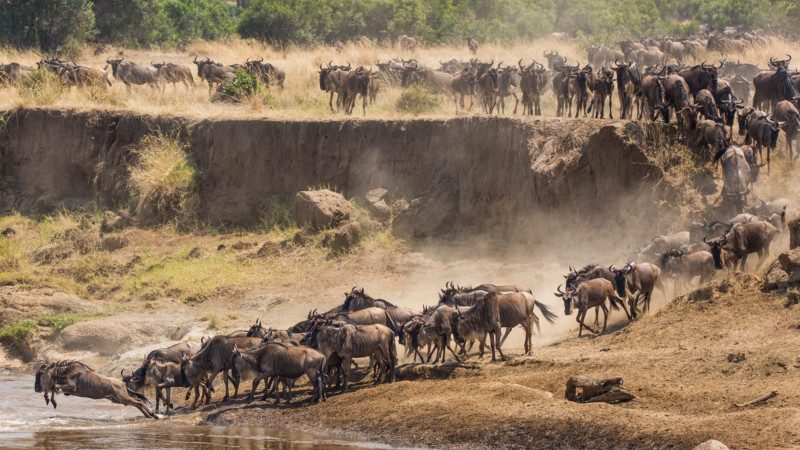
Serengeti National Park Is the UNESCO World Heritage Site covers 14,750 square kms (5,700 sq mi) of grassland plains, savanna, riverine forest, and woodlands. The park lies in northwestern Tanzania, bordered to the north by the Kenyan border, where it is continuous with the Maasai Mara National Reserve. To the southeast of the park is the Ngorongoro Conservation Area, to the southwest lies Maswa Game Reserve, to the west are the Ikorongo and Grumeti Game Reserves, and to the northeast and east lies the Loliondo Game Control Area.
Altitudes in the Serengeti range from 920 to 1,850 meters (3,020 to 6,070 ft) with mean temperatures varying from 15 to 25 °C (59 to 77 °F). Although the climate is usually warm and dry, rainfall occurs in two rainy seasons: March to May, and a shorter season in October and November. Rainfall amounts vary from a low of 508 millimeters (20 in) in the lee of the Ngorongoro highlands to a high of 1,200 millimeters (47 in) on the shores of Lake Victoria. The highlands, which are considerably cooler than the plains and are covered by montane forest, mark the eastern border of the basin in which the Serengeti lies.
Together, these areas form the larger Serengeti ecosystem. Is well-known for its annual migration of over 2million white-bearded (or brindled) wildebeest and 250,000 zebra. The great migration is an iconic feature of the park. It is also the world’s longest overland migration. Roughly 2 million wildebeest migrate north from the south all the way through the park north into Maasai Mara. From January to March (calving season), half a million wildebeests are born which makes sure the herd survives to the next year.
In March, the herds leave the southern plains and start the migration. Giant eland, plains zebra, and Thomson’s gazelle will also join them on the way In April and May, they will pass the Western Corridor. When the dry season comes, the herd moves north to the Maasai Mara where there is lush green grass.
They will have to pass the Grumeti and Mara rivers through 3,000 crocodiles that wait and suddenly lunge at them. It is a reason why the Serengeti is so famous. When the dry season comes to an end in late October, they will head back down south to where they started their journey a year earlier. The full trip is 800 km (500 mi) annually, around quarterly wildebeest and plain zebras die usually due to predation, exhaustion, thirst, or disease.
The Maasai people had been grazing their livestock in the open plains of Serengeti, which they named “endless plains,” for around 200 years. To preserve wildlife, the Government administration evicted the resident Maasai from the park in 1959 and moved them to the Ngorongoro Conservation Area.
The Serengeti gained more fame after the initial work of Bernhard Grzimek and his son Michael in the 1950s. Together, they produced the book and film called Serengeti Shall Not Die widely recognized as one of the most important early pieces of nature conservation documentary.